Showing posts with label Research. Show all posts

Tuesday, 24 March 2015

Thriller Opening (Research): Cutaways, Jump Cuts and Match Cuts

I decided to do some more research into cutaways, jump cuts and match cuts to get a better idea of what we should do when it comes to editing in our thriller opening. I also thought it might help us out when it comes to things such as issues during the filming and the such. These types of editing though can also give us ideas as to how else we can incorporate them to create certain effects.

Cutaways - when a shot cuts from a person or the main action to an object, another person, a secondary action or the scene before cutting back to the person.
Jump cuts - a type of editing that is used in films to show a skip forward in time, it's quick and simple as two sequential shots of the same subject are taken from camera positions that vary only slightly.
Match cuts - cut between two different objects, two different spaces, or even two different compositions in which whatever is in the camera's view matches graphically and helps to establish continuity and links the two shots together.

Below is a video I watched that helped me to understand the different shots in more detail so I would be able to use them a bit better when it comes to filming the thriller opening.
 

Saturday, 21 February 2015

Thriller Opening (Research): Research into Audience Views on Thriller Films

This is some footage that Millie had taken and I decided to mess around with it edit it, this was us gathering some information on what people like in thriller films and what sort of elements we should include in our own.


Wednesday, 28 January 2015

Thriller Opening (Research): Spielberg - Case Study


Steven Allen Spielberg (Born December 18, 1946) is a well known director of many famous movies from E.T. to Jurassic Park, yet his number one hit in the thriller world was Jaws, using the suspense of the music to his advantage as well as numerous shots of the sight from the sharks point of view and looking at the person above the water. This way of creating suspense was known as inspirational and aspiring to many.

A well known way of him using bright light in dark scenes is something I want to incorporate into the thriller opening of ours as he uses a bright light before making it less bright as well as making the outline of the light stand out a bit more using dust particles, mist or even fog, it's a very inventive way of doing things in my opinion.

A little fact that I've found out about what he incorporates into his movies is that he always makes his protagonists come from families that have been broken up or with fathers that are reluctant, absent or just mostly unimportant which is supposed to represent, in some ways, his own childhood life when his parents divorced. This was just a little fact I wished to include in on this.

He is very much, one of the richest directors in all of Hollywood with many nominations and Oscars secured under his belt. He is known as one of the leading pioneers for the New Hollywood Era which refers to films from the 1960's to the 1980's.

Other famous films apart from E.T., Jurassic Park and Jaws consists of Who Framed Roger Rabbit? A movie which combines animations and humans in one movie and pretty much throughout the entirety of the film.

A noticed theme throughout Spielberg's work is that the characters either find something extraordinary or come into contact with a situation that's very much out of place, something that our thriller movie opening does as well with the main protagonist coming into contact with ghosts, an extraordinary being of the sorts.

One of his famous directing trademarks is low height tracking shots - something he has managed to incorporate into many films of his, consisting of Hook, E.T., Close Encounters of the Third Kind and A.I Artificial Intelligence.

Thriller Opening (Research): Hitchcock - Case Study


Alfred Hitchcock (known as Sir Alfred Joseph Hitchcock as well) was born on the 13th of August in 1899 and passed away on the 29th of April, 1980. He was a famous film director and producer, well known for his work in the psychological thriller genres - nicknamed as the "Master of Suspense". He used many techniques to create suspense in his films and the ways he did such is something I would like to incorporate into our movie opening as suspense is key for thriller openings and this is why I will be looking into further depth of Hitchcock's work.

Filming over fifty feature films in his career that widened over six decades (60 years), he is very much regarded as the greatest British filmmaker due to these many films he has directed and produced which is a great title to hold.

Even today, Hitchcock is seen as a great director as during the 2007 poll, he gained first place as was claimed as "Unquestionably the greatest filmmaker to emerge from these islands." For years to have passed and him be still known as someone so great tells us what an impact he has left in the film world. His great work has caused him to be an engaging director who can toy with the audience's emotions as though it was  game as "his flair was for narrative, cruelly withholding crucial information (from his characters and from us) and engaging the emotions of the audience like no one else."

His way of working is inspiring and the way he hides crucial information is something I would like to engage and use within our thriller opening with the plot twists we have planned out and the ideas that we could develop. He is also described as "the most influential movie maker of all time" by MovieMaker, a popular magazine.

His most famous film has to be Psycho where the heroine dies so early in the film as well as the suspense built up towards it. It definitely won him a lot as well as being a blockbuster which defined hallmarks of a new horror movie genre and has been copied by many authors of subsequent films.

Monday, 26 January 2015

Thriller Opening (Research): The Woman In Black Textual Analysis

The Woman in Black is a film about the 'murders' of kids and a young lawyer travels to a remote village where he discovers the vengeful ghost of a scorned woman is terrorizing the locals. I decided to do an analysis on this as well due to the opening having more thriller aspects compared to Black Swan.

In the first two minutes of the film, it is opened with a lullaby soundtrack. Lullabies are meant to show a sense of understanding, a sound of safety and sounds very much child-like. Yet the way that this soundtrack is used is very much different compared to what we expected as instead of giving us this sense of safety and understanding, it gives off a chilling effect of insecurity as well as fear for some, expecting the unknown.
 
After the lullaby, it shows a room with three girls there, their costume seemingly Victorian which shows that zeitgeist has been represented within the film. This also tells us the time period in which the story would be set in as well as who these strange murders are happening to, the 'targets' so to speak. It can also set the pace of he film with the fact that the events occur in quite a fast pace, never slowing down. This is all shown through a long shot of the three as well as the room they are in which shows their age through numerous ways, such as the dolls they're playing with, the objects and other toys that are in the room and the colours, it almost gives off a light and eerie feeling before changing.
 
A long and high angled shot is used when the girls look up at something or in this case, someone. This shows them as being inferior to whatever they look at and remind us that these three are still children, in case we had forgotten for some odd reason, this can also show that the girls do, in fact, see someone there but when the later shot of the room shows, there's no one in the room. This shot gives a sense of mystery and wonders of the unknown.
 
Through editing, at this point, eye line match is used as after looking down at the three, this shows us them then looking towards something else and then shows it us from their point of view, creating a sense of suspense and foreboding. After this shot though, the girls get up and end up stepping on dolls and teacups, the sounds of these objects breaking are louder than we'd usually hear them, this sort of sudden sound indicates the harmony that was once there is now broken, as well as seeing the dolls breaking which gives a sense of foreboding, as though the childhood of those three girls is broken or that is what the three girl's bodies is about to become.
 
The girls walk towards the windows which give out a light which is actually much brighter than we would expect it to be, but this bright light that radiates through the glass represents the saying of "going towards the light" as it shows the three walking towards them. This can instantly tell us that the three are going to die.
 
 
The match on action shows the girls opening the windows, creating an atmosphere for the rest of the movie and almost wanting people to hope more that nothing happens to them despite the events that are slowly progressing and are bound to happen. After the three jump out of the window though, a piece of dialogue is heard from the mother - assumed, who is screaming; "My babies!"
This dialogue shows how everyone would see them, everyone would see the children as nothing more than babies and that they had only just took their first few steps into the world. This piece of dialogue is representative of their age.
 
The scene then quickly cuts to fog everywhere, creating a sense of the unknown as well as confusion as we don't know for sure what exactly had caused the three girls to do what they did. This fog also blinds the sight of the audience so they don't know what's in front of them, almost indicating that people won' know what they're walking into, the audience in particular.

Thriller Opening (Research): Black Swan Textual Analysis


We had a look at a thriller film known as Black Swan which is purely about ballet and the insanity that erupts from the leading female when she believes that people think she won't get the role within Swan Lake. I decided to analyse this opening due to the build up it makes as well as how it represents things through mise-en-scene.


The opening to Black Swan shows us ballet shoes and a dancer, instantly indicating towards what the film will be about, giving the audience a bit of insight in what to expect before showing us the female's costume which is white, indicating purity but, if we focus on what was mentioned earlier, it can also represent her sanity and her being sane at the current time as she's all alone.

There aren't objects nearby either, just her and a spotlight, this could represent a sense of mystery as well as telling us she's empty - this is because the clip later shows her waking up, indicating that what happened in the first two minutes of the film that the female was dreaming it all up. This can also tell us her state of mind and how she's feeling, from what is seen, she feels like she's being taken over, meeting some sort of 'problem' which is indicated by a male wearing black clothing. This male wearing black clothing could also represent the side of her that's slowly going insane.

With the editing done in the first two minutes, not much can be told about it apart from the females wild imagination which is seen by the male in black changing into a bird-like creature. The special effects used show a wild transformation from human to creature as it shows her vivid imagination as well as it showing her sanity.

A spotlight is seen throughout and at the start, it seems to focus on her before the male enters the scene. This indicates that the female is the leading role before the male approaches her and almost envelopes the female with black feathers. This can be seen as an obstacle, another person who is aiming for the same spotlight as herself, a competition for the role.


Through the use of the soundtrack, we can hear the song "Swan Lake" played in the background, this is a well known ballet song, as well as being a well known performance. Those that know of this song know of the performance and know of what occurs, as well as all the dark sides that happen within it and issues that arise. This soundtrack indicates what will be happening later on in the film and what course of events will arise.

Thinking about non-diegetic sounds, there's heavy breathing during the two minutes before she wakes up, this tells us of the panic that the woman is feeling, as well as her being scared of what's to come, this is also something that can affect the audience as well as sometimes, the audience would put themselves in a similar position to the protagonists of films and in this case, the audience may feel the same way as the leading lady of this film. Another piece of non-diegetic sound is at the start of the title sequence as it when the title appears, a woman's laugh is heard. This bit of laughter and the timing of it can indicate the thoughts of the female thinking that no one thinks she can get the role of the "Black Swan", the title of the movie as well.

A tracking shot as well as it seeming being hand held as well due to the unsteadiness of it, is used when following the male from the darkness, giving a sense of mystery as it can make us think that someone else, another obstacle other than the male dressed in black is another bit of competition or issue for her. This shot follows the man towards the female and is showing the arrival of a new rival or problem arising.

Finally, a long shot is used when she's in the spotlight before, a shot that is shown before the male walks out of the darkness, In this shot is only the female, seated on the floor, and in the spotlight alone. This type of shot is used to show her purity and her innocence as well as it representing her sanity still in one piece.

Thursday, 22 January 2015

Thriller Opening (Research): Uses and Gratifications

Uses and Gratifications is an important theory for anyone to know. According to this theory, we all have different uses for the media and choose what we wish to see and what we don't, just like many of us turn off the television if there's something we don't like that's on. In more simpler terms, when we watch the media, we expect something from it and don't watch it just for mindless entertainment.

There are four types of gratification found and they are the following:

Information:
This when we want to find out information on the society we're in and about the world we live in, satisfying our curiosity on the unknown. Some examples of such things would be documentaries and news as these are telling us important facts about many things, including the world.

Personal Identity: There's the idea that we watch television in order to find a role model for our appearances and behaviour. Some sort of inspiration. This is also the idea that we identify with the characters we see in TV dramas and soaps.


Integration and Social Interaction: We sometimes use media for research into circumstances that other people can be put in and it allows us to sympathise with the lives of characters who can get into incidents that many people in reality get caught up in. This is the idea that television will help us get along with our friends.

Entertainment: This last idea is that we simply use media for enjoyment and to help us relax after a day of stress and it's the simplest one of the lot to understand.

There are criticisms of the theory though which goes along the lines of us not actually having a choice over what we watch or listen to. An example of this would be that if I were to put on music in the car with other people in there, the others wouldn't be able to get a choice in music that's being played or something of the sort.
There's the second problem which relates to the last idea for the theory as, for example, if we saw something we don't like, we can't always change it in order to see something that we actually enjoy.
Many other problems exist which make this theory less plausible and undermines it.

I looked into uses and gratifications to get an idea on what the audience for our thriller opening would see or would enjoy seeing and how they would view it, thinking about how to make it so people might see certain characters as role models or just to find it entertaining.

Thriller Opening (Research): The 6 Stages of Media Production

There are six stages to media production and here they are;

Financing: This stage comes before pre-production, and involves budget forecasting, finding investors, and is the most important stage in media production as it decides on how things will run from then out, whether everything will run smoothly or there being some sort of issues.

Screenplay: Another stage that comes before pre-production, screenplay is defined as being a written piece of work by the makers of a film or television programme.

Pre-Production: This consists of processes such as the planning, the scripting and the storyboards as well as other things but these are the main parts of pre-production as it's very much all the planning and ideas stages, storyboarding is seen as a difficult task due to the amount of time you need to put into making it accurate and the fact that it needs to be updated if a new scene or something has been changed.

Production: The fourth stage and the most obvious one as it's the shooting of the film and carrying out the processes that is needed in order to produce the film itself. This also includes recording sounds that are needed in the opening.

Post-Production: The fifth stage of media production is post-production which consists of editing different shots and creating the final piece. It's the one stage where everything finally links together in order to create the final masterpiece.

Distribution: This is the final stage and is thinking how to distribute the final piece and advertise it to an audience, this includes things such as film prints, CD/DVD and the lot.

Tuesday, 20 January 2015

Thriller Opening (Research): The LifeMatrix

One of the newer approaches of our time, the LifeMatrix tool, which was launched by MRI and RoperASW, has defined 10 different audience categories which is centred around values, attitudes and beliefs. As well as more fundamental, demographic audience categories. (Source: Media Studies Key Concepts - Audience)
Below are the ten different categories and what falls under each one.

1 - Tribe Wired - Digital, free-spirited, creative young singles
2 - Fun/Atics - Aspirational, fun-seeking, active young people
3 - Dynamic Duos - Hard-driving, high-involvement couples
4 - Priority Parents - Family values, activities, media strongly dominate
5 - Home Soldiers - Home-centric, family-orientated, materially ambitious
6 - Renaissance Women - Active, caring, affluent, influential mums
7 - Rugged Traditionalists - Traditional male values, love of outdoors
8 - Struggling Singles - High aspirations, low economic status
9 - Settled Elders - Devout, older, sedentary lifestyles
10 - Free Birds - Vital, active, altruistic seniors

Looking at these different categories, I believe our audience will fall under the Fun/Atics or/and Tribe Wired groups due to this being a bit of fun and the younger audience may find it to be such as well as it being very much digital based.

Friday, 9 January 2015

Thriller Opening (Research): The Genres within Thrillers


I will be looking into the many genres of thriller films as it might help me think what our thriller opening would fall into out of these.

Psychological Thrillers
Known to be mostly fictional thrillers which shows the characters unstable emotional states and shows different representations. These often emphasize on such things and give a sense of mystery, drama, action and as well as the typical horror.
An example of this type of genre is a film called Zodiac, produced by David Fincher.
A San Francisco cartoonist becomes an amateur detective obsessed with tracking down the Zodiac killer. (A basic synopsis from IMDb)

Some themes in psychological thrillers are:
 - Reality
 - Perception
 - Mind
 - Existence/Purpose
 - Identity
 - Death

Romantic Thrillers
Romantic thrillers are seen as a fictional story full of thrills though it will emphasize the romantic ideals of the characters within it and can show how much of a thriller that even romance can be. That things aren't always lovey-dovey and a much more mysterious side to it all. An example of this genre would be "The Illusionist" which was directed by Neil Burger. In turn-of-the-century Vienna, a magician uses his abilities to secure the love of a woman far above his social standing. (A basic synopsis from IMDb).

Some themes in romance thrillers are:
 - Anticipation
 - Uncertainty
 - Surprise
 - Anxiety
 - Terror
 - Obsessive Love
Medical Thrillers
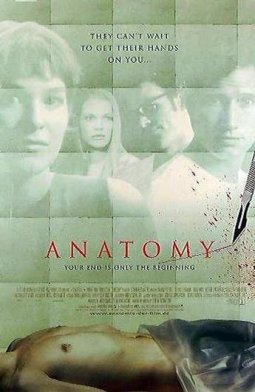
This too would be a fictional film that is focused on the medical side to things, focusing on a single character or multiple with an illness or some sort of disease and follows them throughout the film. It can also follow the doctors or other medical staff that are featured within the film and learn about their side of the story and how they deal with helping patients and the sort. Many incorporate horror into this in some way as well. An example of this genre is "Anatomy" which is directed by Stefan Ruzowitzky. Medical student Paula Henning wins a place at an exclusive Heidelberg medical school. When the body of a young man she met on the train turns up on her dissection table, she begins to investigate the mysterious circumstances surrounding his death, and uncovers a gruesome conspiracy perpetrated by an Antihippocratic secret society operating within the school. (A basic synopsis from IMDb)

Some themes in medical thrillers are:
 - Grief
 - Near-death experiences
 - Heartache
 - False hope
 - Anxiety
 - Loss
Horror Thrillers
Horror films are, once more, fictional thrillers in which it focuses on the dark and brutal sides of a certain character. These keep most on edge and are often known as "Nightmare Fuel", keeping most awake and using what we fear most, the supernatural, against us. This is something we could incorporate into our movie opening as ours is based on the ideas of ghosts and supernatural beings. An example of this genre would be "Eden Lake" which is directed by James Watkins. Refusing to let anything spoil their romantic weekend break, a young couple confront a gang of loutish youths with terrifyingly brutal consequences. (A basic synopsis from IMDb) 
S
ome themes in this genre consist of:
 - Demons
 - Supernatural
 - Murder
 - Paranormal activity
 - Serial killers
 - Gore
Military/Crime Thrillers
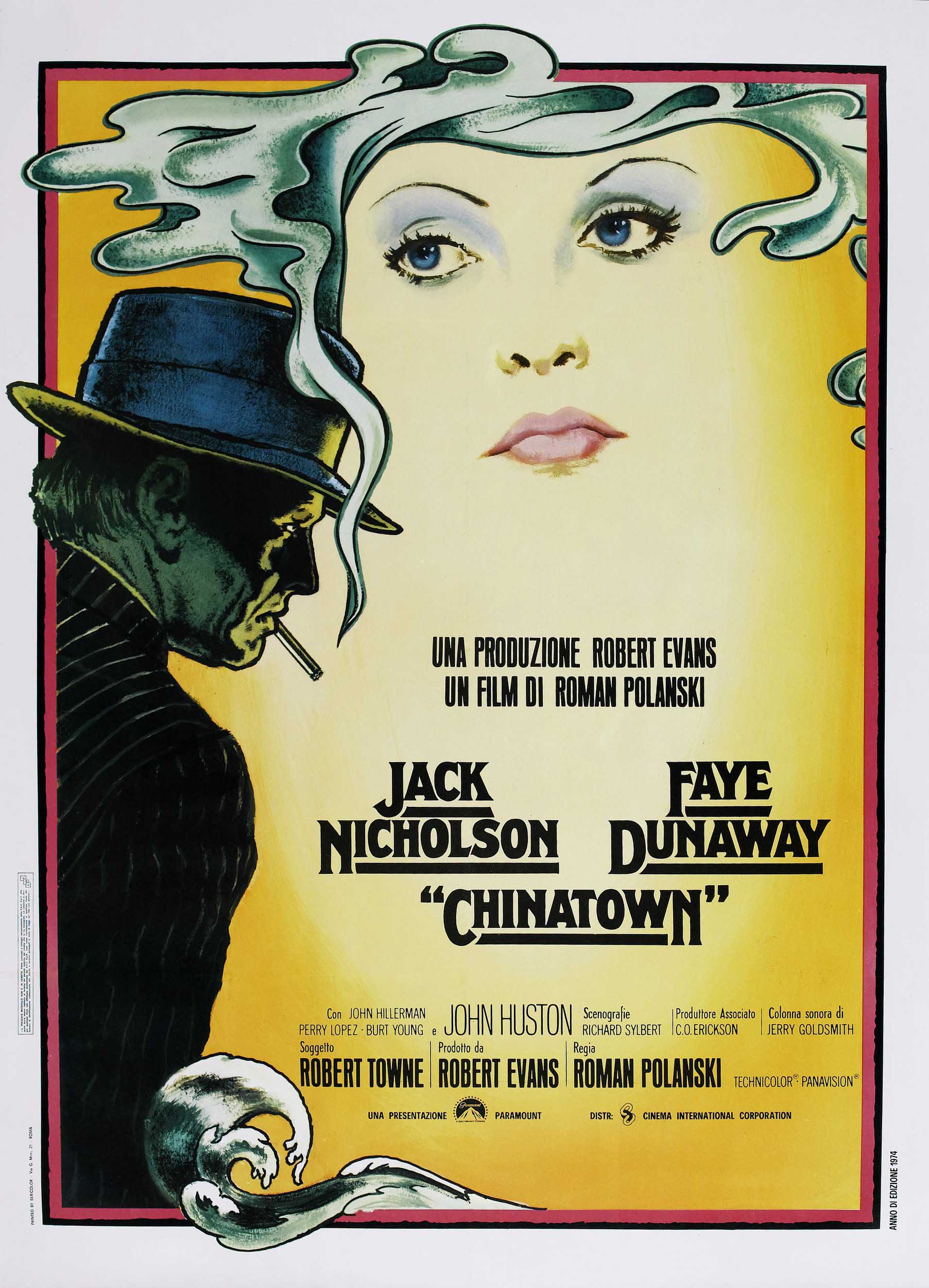
This falls under the category of being a fictional film and would most of the times follow the footsteps of a soldier involved in a war-like incident. It will follow through the events, ending in either the death of the main character, an ending which I'm sure most wouldn't want, or ending on the note of the war being won and the soldier is still alive and well. There's also the chance of it ending as the war occurs. This genre can also be known as the crime genre in which case, it follows either a police type figure or it will follow a crime/mafia figure, proceeding in a chase between the two. An example of this genre would be "Chinatown" which is directed by Roman Polanski.A private detective hired to expose an adulterer finds himself caught up in a web of deceit, corruption and murder. (A basic synopsis from IMDb)

Some themes in this genre consist of:
 - Violence
 - Weapons
 - Murder
 - Good Guy/Bad Guy
 - Tense
 - Fear


Conspiracy Thrillers
This falls under being a fictional thriller again and it focuses on a conspiracy of some kind that people point out a lot and will follow that theory throughout the film. This can be a theory that everyone/some people/one person would believe in and it would often take a while for people to believe in such a theory but most would follow it in order to give themselves a slight change of pace.
An example of this genre would be "All The President's Men" which is directed by Alan J. Pakula.
Reporters Woodward and Bernstein uncover the details of the Watergate scandal that leads to President Nixon's resignation. (A basic synopsis from IMDb)

Some themes in this genre consist of:
 - A conspiracy theory
 - Accused person
 - Secret information
 - Deduction
 - Influence
 - Improvement

Wednesday, 31 December 2014

Thriller Opening (Research): Testing out Camera Angles

Over the course of the holidays, I decided to test out different camera angles, recording small scenes and stringing them together. This is something to help us think through what sort of camera angles we would want within our movie opening and how much time we should spend on each. We also used camera angles that we've mentioned that we want to use within our opening sequence.


Monday, 8 December 2014

Thriller Opening/Theory (Research): Representation of Disability Within Media


In media, we were looking at disabled people and how they are represented by the media once more, looking at different articles for research on how they are represented and reasons as to why this may be occurring. I looked at this as well because it may also help me with thinking of ways to represent disability within my thriller opening if I decide to do so and how to represent them as such as well as how the audience may see our thriller opening.

From what I have read in the "Unlimited" source, they are aiming to assist people who are disabled, whether they want to go into acting or into filming, to achieve their goals and be more noticed as they state that the "first disabled character portrayed by a disabled actor on British television did not appear until 1992" which means that before then, disabled characters were played by those who weren't disabled to start off with and this could be seen as showing them differently to how they actually are. A source of misrepresentation.

The second article, "Women, Old and Disabled and Still Under Represented", tells us of how even gender and age is an issue as well as disability when it comes to them being represented in a series. In this study of "small screen diversity" showed that men and the younger generation along with the healthy are presented more within series over women, the elderly and the disabled.

Reading more into the article, it appears that even sexuality is under represented as well; "Lesbian, gay or bisexual people compromised 1% of the overall TV population" stated the study. Another thing is ethnicity is being under represented as well according to the study in this article, making it seem that young men or men in general are seen more or often and are, in most cases, white.

The lack of representation of disabled people though is second to none as just below that is indeed the sexualities as disabled people seem to be represented at least a little bit more, if not, inaccurately.
In a third article that's about Ricky Gervais' character "Derek" and disability portrayed in it, tells me about the fact that Ricky believes that Derek's actor was disabled or not in actuality would make no difference to the character at all, hence why Derek's actor is not disabled.

Even the character itself was assumed to be autistic before the show was written despite Ricky saying that there had been no hints towards disability within this character of his. This can tell us that the assumptions of people who view the series have different ideas of what disability is represented as.

For example, Derek was rumoured by many to be autistic and then everyone started to think he was yet Ricky did not intend to portray him in such a way. Instead, he wanted to create a character that was different and the fact that people put a label on him of being disabled because of how he acts and speaks, dresses, behaves, it tells us that disabled people have been labelled as someone like Derek, someone who's different and odd, out of place.

Looking into some articles of my own, I found out of a piece that was called "The representation and portrayal of people with disabilities on analogue terrestrial television", within it stated that people with disabilities that are noticed most within TV dramas are ones that are easily recognisable., for example; "mobility, sensory impairment and disfigurement/physical impairment."

This can show us that it's difficult to show someone with a mental disability, or even if the media class it as a disability. Another thing that's stated is that the representation of disabled people within TV dramas has dropped since 2004 and their belief for it is "stereotyping" which leads us back to Paul Hunt's 10 identified stereotypes within media for disabled people.

Thriller Opening (Research): Audience Theory


During media, we looked into theories on audiences and why certain audiences react like they do to certain genres of film, these are examples and theories of why audiences will react in such a way that they do.

Hypodermic Syringe
There is a theory known as the hypodermic syringe model which is where it is believed that media is like a syringe and will 'inject' ideas, attitudes and beliefs into the minds of the audience who are seen as powerless and have little choice but to be influenced by such a thing - for example, if you were to watch something violent, like a murder movie, it is suspected that this will lead to that person going out and murdering someone. This theory is most popular with violent movies though as people believe that anything that's seen as violent can easily be repeated by a member of their audience. This goes to show though, that it may not effect everyone in the same way, showing that this theory isn't concrete. This theory was created in the 1930s by a group of German Marxists.


Identification and Sensitisation
The idea of identification is that violence that is portrayed within media can relieve the tension and/or desires of the audience through identification with fictional characters or events. This helps lessen with how many murderers there are in the world as they would identify themselves with a certain character for example and could imagine themselves doing such things that a certain character would do and that would sometimes take their mind off of it.
Looking on the flipside, sensitisation is where the violence can be so shocking to some where it puts them off it altogether and can also make them more aware of the consequences. It's also argued that sensitisation could make people more aware and more likely to report cases or incidents of crimes.

Sunday, 7 December 2014

Thriller Opening (Research): Practice Lighting Shots

I decided to practice different lighting shots to create different moods that I could use within the thriller opening that me and Milie will be making. I really like the 1st and 3rd picture with the lighting shining up on the face and the lighting shining down. The light shining up gives a thrilling sense for the audience in my opinion and is quite the cliche lightning style. The light shining down shot gives a little bit of chills.


Friday, 28 November 2014

Thriller Opening (Research): Textual Analysis - Se7en

We have decided to look at the thriller movie 'Se7en' in order to gain ideas on what to do in our thriller opening which we will be making later on in the year and are currently planning.

This thriller film stars Morgan Freeman and Brad Pitt, two famous actors and it follows them as they try to solves the mystery behind these murders that are occurring, relating back to the seven deadly sins.

In my opinion, after watching the entire movie after being shown the clip, I enjoyed it a lot and did indeed find this to be quite a good movie and was willing to sit through the whole thing. A lot of things that happened in the clip we were shown made me want to watch the full movie and hence, I did so.


Thriller Opening/Theory (Research): A Touch of Frost ~ Camera Shots


This post is about disability represented within "A Touch of Frost" and how it's represented through different camera shots. This could give us ideas on how to show disability in our thriller opening if we decide to do so, giving us ideas as well for shots we could use anyway.


In a clip I’ve watched from the series, A Touch of Frost, where I’m focusing on the character Billy and how disability can be represented in TV dramas, which seems odd yet they are portrayed in different ways for definite. I’ll be mostly looking at the camera angles used though within the clip I’ve seen in order to show how he is presented.  There seems to be a shot of Billy at the start, being tracked using a long shot which allows the audience to follow his trail as he dusts himself off during this scene. This could hint at something suspicious has happened. A couple of minutes later, there is then a close up of Billy’s face, showing a sense of fear upon it as though he is a deer caught in the headlights of a car, like he is a victim.

It is noticed that when the father and inspector enter the room Billy is in and they’re sat down, there is a two person shot of the father and Billy in the same scene, this can almost show that Billy needs someone with him as when it shows the inspector, he doesn’t have anyone else in his shot, almost showing that he doesn’t need anyone or any support. Yet looking back at Billy and his father, it almost appears like his father is babying him by being in this shot with him. A little later on, it shots Billy in a low angle shot, showing him as almost inferior to the inspector and being judged in a way, but it almost shows him as being vulnerable once more and can also hint at him having down syndrome.

Thursday, 6 November 2014

Thriller Opening (Research): Conventions of a Thriller Film

In a thriller film, the producers do many different things to make sure that the audience knows that the film is indeed a thriller film. For example, they will dim lighting, making it quite low key, many quick cuts between scenes will make it so that the tension would rise as it would be quite snappy at showing things. Shadows give off a sense of darkness and can sometimes give the audience a sense of thrill, alongside music that slowly builds up, creating a sense of tension. Many conventions for thriller movies do raise the tension as it’s practically their job. There would be dramatic changes in the angle of shots, showing power at points for certain characters, them trying to think or doing a certain action which would set the scene and mood. Diegetic sounds of breathing can easily make a person tense up and is quite good for a dramatic effect and to make the audience sit at the edge of their seat.

Black and white shots alongside a mixture of montage shots show us of time passing by and can make things seem more dramatic, even a falling glass can be seen as a movement that would definitely be a part of a thriller film. There is also a lot of fast paced editing within certain scenes which can bring out the excitement of an audience or anxiety, or even make them a bit nervous though it depends on the scenes that are finishing.

Though the most cliché thing to happen in thriller movies is the scenes where protagonists are at the mercy at the antagonists, this can give the audience a sense of thrill as though hope is lost but obviously, the protagonist will triumph in the end, whether it means risking their life or sacrificing it, it shall be done in order to defeat the villain. A typical example of this would be Jaws, a thriller film of a man-eating shark but in the end, they do, of course, beat the shark, a thriller film which I have recently watched.

Depending on the genre type may vary on what is to be involved in a thriller movie as there are many different sub-genres in the world of thrillers which gives us a variation in movies and can make it so that we don’t know what to expect next.

According to a site known as MindMeister, there is five areas for conventions and codes within thriller films which are the feelings thrillers create within their target audience, thriller narratives, iconography, characters and of course, themes. These are important in the eyes of the people that post on this site as there are many types that fall under each category. For example, under ‘Feelings thrillers create’, they believe that thrillers should cause the audience to feel excitement, suspense, anticipation, anxiety, uncertainty and should be, of course, nerve wracking for the audience to watch at points where there is high tension.